Updated July 2026 — reflects EPA’s November 2025 deadline changes.
If you’ve clicked on this blog, chances are, the CROMERR application for your pretreatment program is still on your to-do list. And it’s not just you—many in the United States find themselves in the same boat.
Identifying the Hurdles
Ever wonder why getting around to that CROMERR application feels so tough? Here’s what we’ve learned from working with pretreatment pros like you:
- Is it procrastination? It’s a common obstacle.
- Feeling confused? The complexities of CROMERR can be overwhelming.
- Strapped for time? You’re balancing numerous priorities.
The Reality for Publicly Owned Treatment Works (POTWs)
Operating in one of the most challenging environments, public water and wastewater sectors are often under-resourced and understaffed. It’s no wonder that navigating the complexities of EPA reporting requirements takes a back seat.
What This Blog Offers
This isn’t a deep dive into the CROMERR rule (for that, we’ve got a comprehensive CROMERR guide here). It’s three actions you can take this week to get your application moving. They won’t finish it – but they’ll get it started, which is the part most programs never get past.
Why It’s Smart to Start Your CROMERR Approval Sooner Rather Than Later
CROMERR (the Cross-Media Electronic Reporting Rule) was introduced by the EPA in 2005. It sets the bar that electronic reports have to clear before they can replace paper ones.
You’ve probably seen a deadline move around – December 2020, then December 2025, and now December 21, 2028. Those dates are real, but they aren’t CROMERR. They belong to the NPDES eReporting Rule, and they cover one specific thing: your program’s annual report to your approval authority going electronic.
What Actually Happened: the December 2025 deadline passed. Beginning in November 2025, EPA approved alternative compliance deadlines for states that requested them. Most states now have one, generally landing on December 21, 2028, the ceiling written into the rule. It can’t move again without a new rulemaking.
What That Means for You: those deadlines cover the annual report your program files with your approval authority – that’s the piece that must go electronic. They say nothing about how your industrial users report to you, and they are not a CROMERR deadline. CROMERR has no deadline for local pretreatment programs at all.
And that’s exactly why this is still on your to-do list. CROMERR doesn’t arrive with a due date, it arrives with a trigger. The moment you decide to start accepting reports from your industrial users electronically instead of on paper, you need approval in hand. Until then, you’re still on paper. The timeline isn’t EPA’s. It’s yours.
Kickstarting Your CROMERR Application: A 3-Step Guide
Starting your CROMERR application might seem like a daunting task, but the thought of getting started is often the hardest part. These 3 steps will get your application moving. The paperwork is more approachable than most people expect – the wider journey, including your program modification and getting industrial users on board, takes longer.
Here’s how to get the ball rolling:
1. Get Up to Speed with the CROMERR Basics for Pretreatment
Your Starting Point: Begin by arming yourself with knowledge. EPA publishes a guidance document written specifically for Publicly Owned Treatment Works (POTW) pretreatment programs and electronic reporting. It’s short, but it covers the essentials: how the CROMERR process works, who is responsible for what, and how to identify your approval authority.
What You’ll Learn: Alongside a plain-language snapshot of the rule, it spells out the three conditions that actually trigger CROMERR for your program: you receive submissions electronically from regulated facilities, those submissions are required by an EPA-authorized program, and you’re accepting them in place of paper. If all three are true, you need approval.
One thing to check: EPA updated this guidance in May 2024. If you have an older copy saved from a previous look at this, swap it out.
You can access the current version at the link below:
Publicly Owned Treatment Works (POTW) Pretreatment Programs and Electronic Reporting
2. Identify and Reach Out to Your Approval Authority
Who to Talk To: Understanding who reviews and approves your application is crucial — and it might not be your state. EPA has designated certain authorities, either at the state level or within EPA regions, to oversee this. The map below shows where your state sits. If you have updated information, reach out and we’ll revise it.
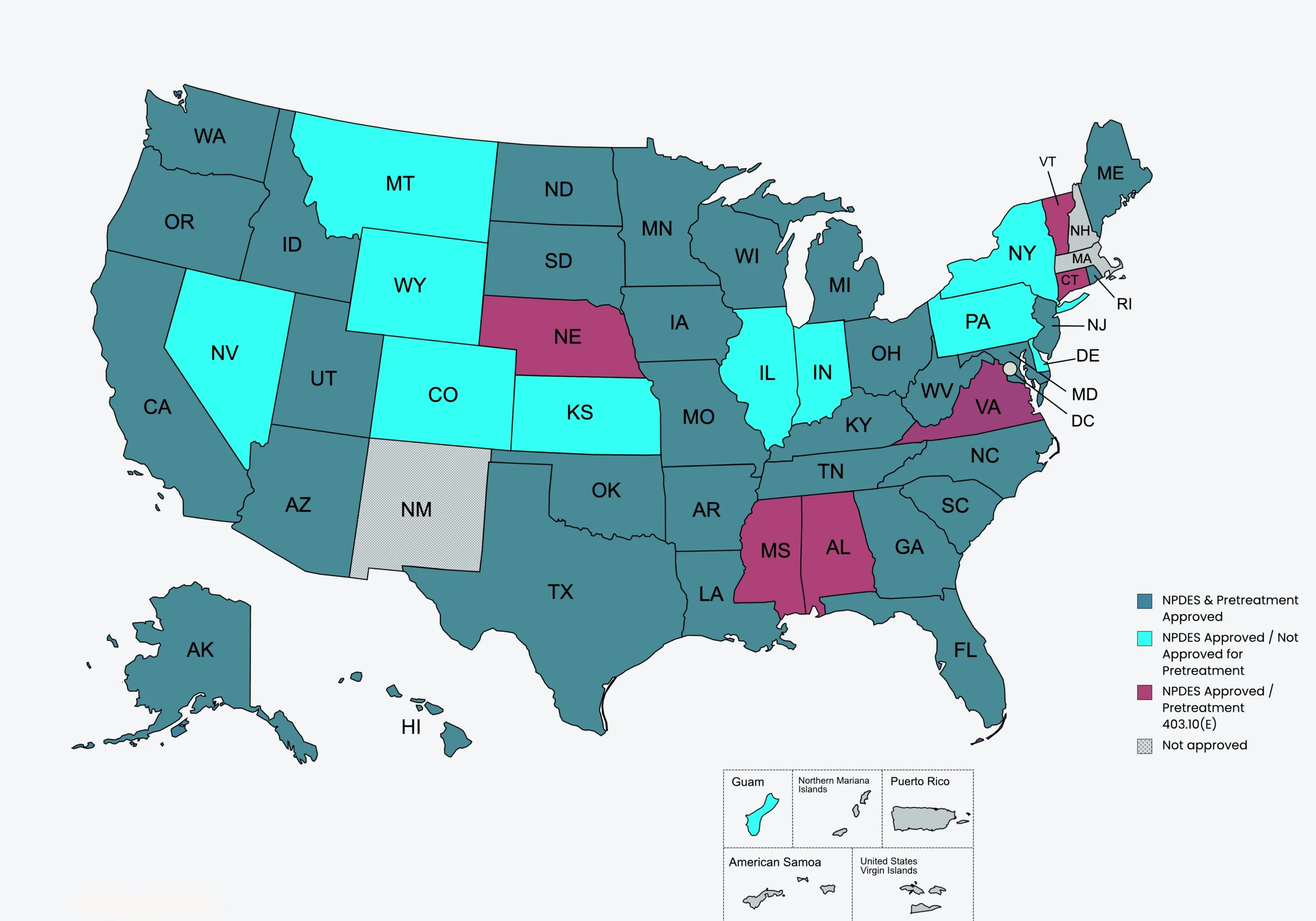
Finding yourself on the map:
NPDES & Pretreatment Approved – Your state holds pretreatment approval, so your state is your approval authority. Start there.
NPDES Approved / Not Approved for Pretreatment – Your state runs NPDES but doesn’t hold pretreatment approval, so your EPA region is your approval authority.
NPDES Approved / Pretreatment 403.10(e) – Your state has taken on POTW pretreatment program responsibilities in lieu of individual POTWs running their own. Confirm how that applies to your program before going further — your path may look different from what’s described here.
Not approved – EPA runs the NPDES program in your state, so your EPA region is your approval authority.
What You Can Expect: Be aware that your approval authority might not know they’re your go-to for CROMERR, and they may not see the urgency from your perspective. You might need to educate them about their role and make sure they’re on board to help.
3. Start Filling Out the CROMERR Application Cover Sheet
Taking the first step is always the hardest but once you start, you’ll start building momentum quickly. The CROMERR Application Cover Sheet is your initial form. It’s straightforward and should take no more than 30 minutes to fill out.
Submission Tips: After completing it, send it to both your identified approval authority and the EPA’s CROMERR office for review. Don’t hesitate to send it via email and snail mail, while also keeping copies for your records. Diligently following up could be your key to quickly advancing to the next phase.
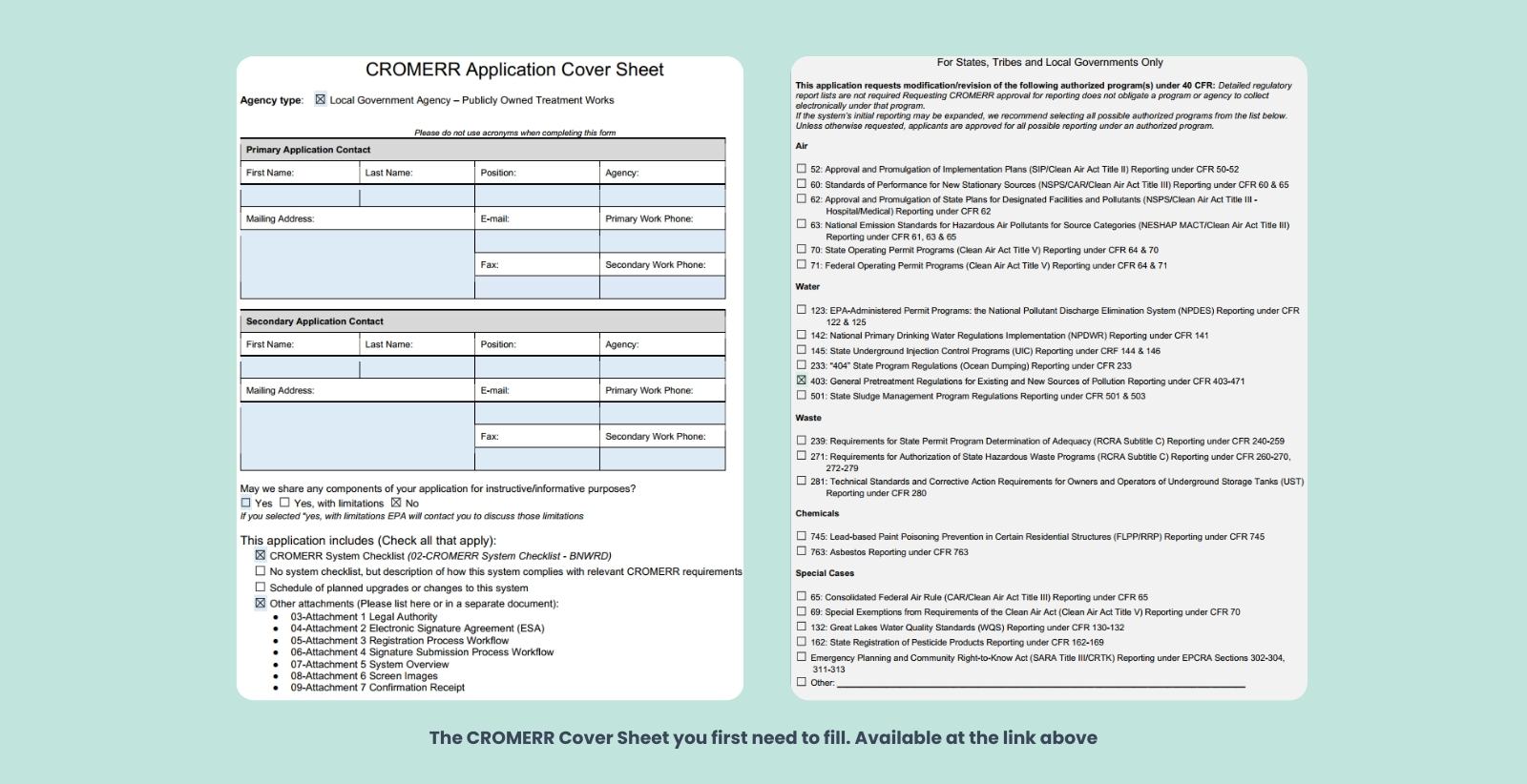
Access The CROMERR Application Cover Sheet here
Streamline Your Journey with Our CROMERR Tasklist
Embarking on the CROMERR approval process isn’t exactly the highlight of anyone’s day at a pretreatment facility. It’s detailed, it’s required before you can accept electronic reports, and let’s be honest, it can get tedious. But staying on track is crucial, and we’ve got just the thing to help.
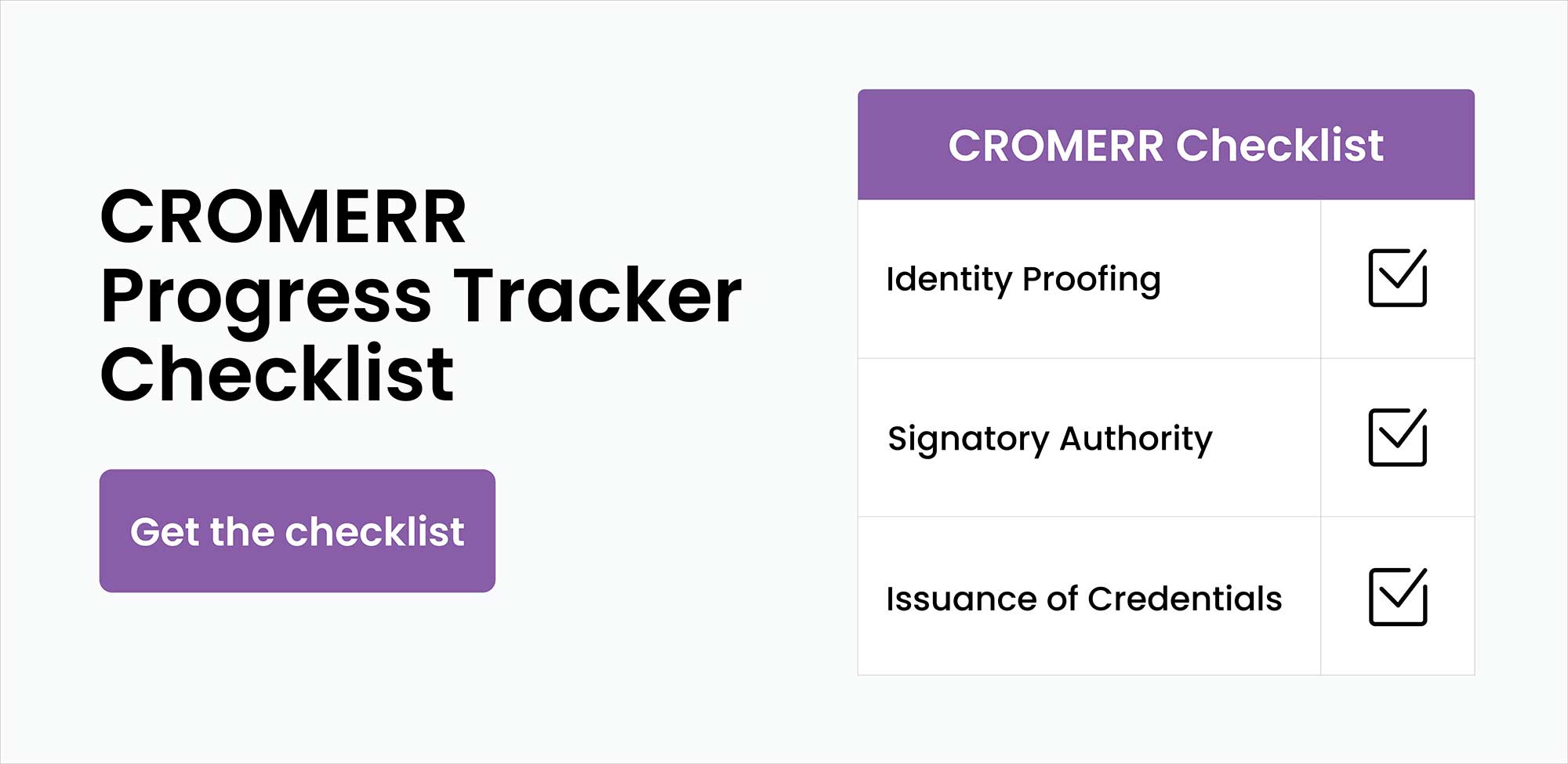
Why You’ll Love It: We know that keeping your application process moving feels like a chore. That’s why we worked with our in-house team at SwiftComply and put together a straightforward PDF tasklist. It’s designed to guide you through each step of the application, making sure you don’t miss a beat.
Your Go-To Guide: Whether you’re stuck and looking for the next step, or you just need a quick check-in on your progress, this tasklist should be your go-to. It’s not only a checklist, but a roadmap that shows you exactly where you are and what’s ahead, simplifying your journey from start to finish.
Make use of this tool to navigate through the application efficiently, overcoming any obstacles that might arise and gaining a clear view of your progress at any stage.
We’ve Helped a Lot of Cities Through This
SwiftComply builds pretreatment software, which means we end up alongside programs going through CROMERR approval fairly often. We’ve seen where applications stall, which approval authorities move quickly and which ones need chasing, and the things that tend to catch programs off guard partway through.
If you hit a wall, or you just want a second opinion on something in your application, get in touch. Happy to answer questions either way.